
 English (United Kingdom)
  Arabic (اللغة العربية)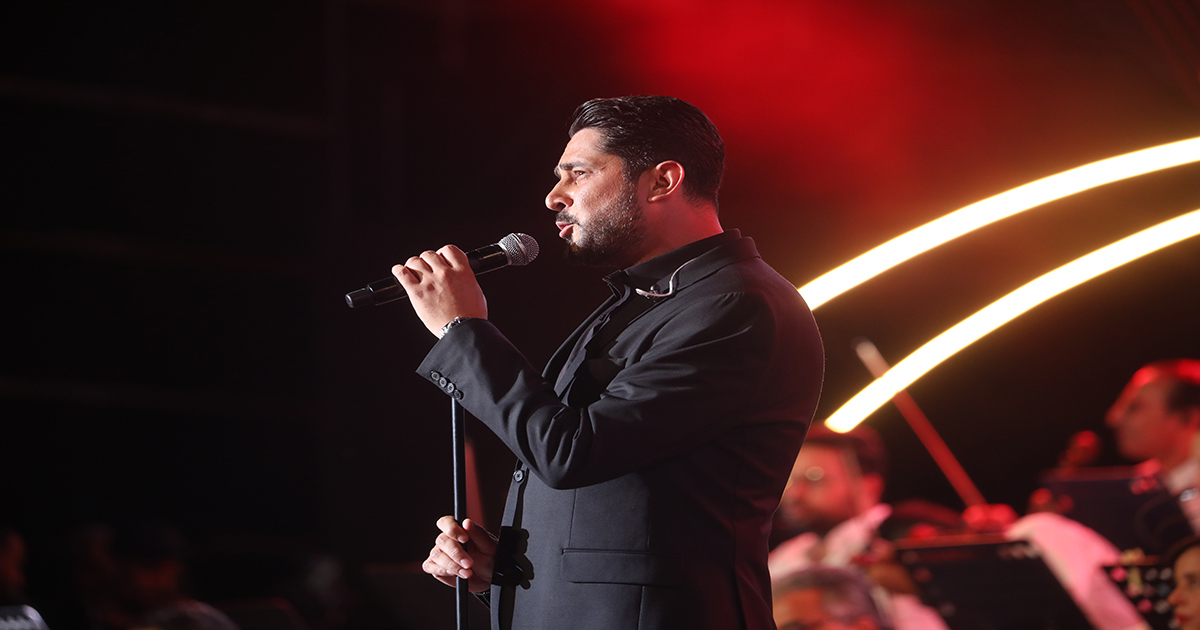
In its 60th edition, the Carthage International Festival evoked an artistic memory that shaped part of its identity, and the evening of Thursday, August 6, 2026, was adorned with the hues of authentic Arab tarab, featuring the presence of artist Mayada El Hennawy and artist Mohamed Khairy. The Syrian voice returned to the ancient stage, carrying with it a tarab legacy that has remained present in the festival's history, since Sabah Fakhri's concerts, which became luminous landmarks in the memory of the Tunisian audience.
Over decades, the Carthage stage remained a fixed destination for Syria's greatest artists, and Sabah Fakhri was one of the most prominent figures who shaped that memory. His concerts were open lessons in maqamat, improvisation, and the fundamentals of tarab, until his name became part of the festival's history, just as Carthage became part of his audience's memory. In this 60th edition, the Syrian musical identity was manifested through two voices belonging to different generations, yet united in their fidelity to the same musical heritage: Mayada El Hennawy and Mohamed Khairy.
In the first part of the evening, Mohamed Khairy chose to launch his new work "Wajhat Nazar" ("Point of View") on the ancient stage, which he graced for the first time, with the music video visuals appearing on screen. To the rhythm of "Lamma Bada Yatathanna," he carried the audience on the wings of his heartfelt voice to worlds coloured by tarab, where words have weight, melody has impact, and performance has a magic that matures with the passing of years. Moving between tarab classics, his voice transformed and coloured, and his performance became an extension of the artists who left their mark on Arab musical memory, such as Umm Kulthum, Sabah Fakhri, and Sayed Mekawy.
In the stands, the audience was enraptured by the gems of songs, deeply listening to an artist who masterfully navigated maqamat and Aleppan qudud without affectation or exaggeration in performance, under the direction of Maestro Mazen Zwaidi. Intense musical borrowings were scattered across the stage as he sang "Sibouni Ya Nas," "Hayyamtni," "Qaddouk Al-Mayyas," and "Ah Ya Helo" – words that reflect the richness of the Arab musical corpus, finding their way to memory and never leaving it. His performance was a living lesson in the art of Aleppan qudud, reminding us that this great heritage still pulses with life in the voices of new generations.
Under the direction of Maestro Youssef Belhani, Mayada El Hennawy took the stage, where the audience awaited her, greeting her with cheers. She sang "Ana Mkhalisalk" ("I Am Faithful to You"), and the audience responded in kind. Mayada El Hennawy represents one of the most important Arab voices that preserved the status of classical song in an era of changing musical tastes. Since the 1970s, she has built an exceptional career, strengthened by collaborations with major composers and poets, foremost among them the legendary Mohamed Abdel Wahab, who saw in her voice a rare ability to carry the Arab tarab project.
On the stage of the Carthage International Festival, which she returns to after 21 years, Mayada El Hennawy performed works that became landmarks in Arab consciousness, such as "Ana Baashaqak" ("I Adore You"), "El Hob Elli Kan" ("The Love That Was"), "Ana Mkhalisalk," and "Fatet Sana" ("A Year Has Passed"). With the audience's interaction, it became clear that these works still maintain their presence because they did not rely on momentary trends but instead bet on the strength of melody, the depth of lyrics, and the richness of performance. Each song was a journey to a time when music was an expression of the finest aspects of the human spirit, where words pulse with meaning and melody pierces the heart.
"Long live Tunisia... Long live Syria," said Mayada El Hennawy after greeting her audience, encapsulating the philosophy of the evening she shared with Mohamed Khairy, celebrating Syrian tarab in recognition of the role this school played in shaping the festival's memory and enriching the Arab musical scene. Her words were like a message of unity between two peoples bound together by music, history, and beauty.
With the song "Al Shams" ("The Sun"), the ancient theatre of Carthage transformed into a space of intimate confession of love connecting the artist with her audience for many years, as the lights dimmed and the space between her voice and the voices rising from the stands dissolved. When the lyrics of "Ana Baashaqak" flowed, the audience became a choir sharing the song, evoking the features of songs that shaped the glory of Arab music and held a place in memories. The scene was majestic, as the boundaries between stage and stands dissolved, and everyone united in a pure tarab moment, surpassed only by the beauty of the encounter and the sincerity of emotion.
In an evening defined by tarab, Mayada El Hennawy carried her audience to the beautiful past, moving between her songs, and tested her audience's love as she stood once again on the Carthage stage, while Mohamed Khairy, in his first ascent, carried the legacy of Aleppan qudud and proved himself a voice worthy of the most prestigious stages. The evening was a bridge between past and present, between two generations of Syrian artists, and between a Tunisian audience that remained faithful to authentic tarab, affirming that Arab music, despite all transformations, remains alive in the hearts of its lovers, and that Carthage, with its ancient stones, will remain a witness to the most beautiful moments of creativity.